I thought I'd posted this a couple of weeks back, and realise now that I didn't, but better late than never – this is an excellent tribute to the poet Martin Stannard, with contributions from Ian McMillan, Alan Baker, Luke Kennard, David Belbin, Adrian Buckner and many more. Martin Stannard's poetry, and reviews, are never less than entertaining and engrossing, which is pretty much what I want from them before anything else. Of course, there's more to them than that, but read the tributes, and you'll want to read the poetry.
Thursday 8 September 2022


Monday 11 July 2022
Caroline Bird on line-breaks
Excellent thread about line-breaks by Caroline Bird, here. There have been a few related discussions elsewhere on Twitter, too, which can only be good. It never hurts to discuss why we like or don't like something in poetry, or perhaps more importantly why we think something works, or doesn't.
Friday 1 July 2022
Out now
A reminder that I have an e-chapbook – Magnetite and other poems – out now from Wild Art Publishing. It collects bird-themed poems from my three full collections along with a couple of newer poems, and matches each piece with superb bird photography from Rob Read (the man behind Wild Art), David Tipling, and others.
If you'd like to buy, it's available in ePUB and PDF formats from the Wild Art shop here, priced £7.99. There are some other goodies in the shop too, so have a good look.
Thursday 30 June 2022
Just arrived
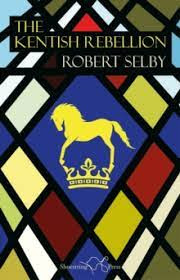
A couple of years ago, I reviewed Robert Selby's The Coming Down Time for Magma. To cut a long story short, I absolutely loved it.
So, I'm really looking forward to the above, a collection centred around the Civil Wars. Collisions between poetry and history are very much my thing anyway, and the 17th century is a particular interest of mine.
More to follow when I've had a chance to digest it, but fair to say that first impressions are very good.
Sunday 29 May 2022
SkyLines programme announced
Nine Arches Press and Writing West Midlands have revealed the full programme for SkyLines, an all-new Poetry & Spoken Word Festival which comes to Coventry from 15-17 July. Tickets are available here.
Festival partners Nine Arches Press and Writing West Midlands, with support from Arts Council England and the Belgrade Theatre, have announced a programme of seven workshops and over a dozen live poetry events, with over 30 poets and spoken word artists appearing.
There’ll be three 8pm headline acts across the weekend – Hollie McNish appears on Friday 15 July as part of her Slug tour, where she’ll be joined by Michael Pedersen. Director of Malika’s Poetry Kitchen.
Jill Abram will be joined by special guests Jacob Sam-La Rose, Lewis Driver, Alice Richmond and Meg Waters on Saturday 16 July, and Sunday 17 July will feature John Hegley’s stellar headline act Drawings of Dromedaries (and other creatures).
Throughout the weekend, there’ll also be an array of poets and spoken word artists – many of them hailing from the west Midlands region – sharing, discussing, debating and celebrating poetry. Highlights include Deborah Alma, Raymond Antrobus, Moniza Alvi, Casey Bailey, Natalie Linh Bolderston, Alison Brackenbury, Rishi Dastidar, Rosie Garland, Roz Goddard, Hannah Lowe and John McCullough.
Sunday 22 May 2022
Some more current reading

I've also been enjoying dipping in and out of Ian Duhig's New and Selected Poems, a book I'd been meaning to get hold of for a while. I've long been a fan of his work, and the new poems are every bit as good as anything he's done, I think. Again, I'll write about it at more length when I've had time to digest it properly.
Saturday 21 May 2022
Some current reading

Since last Monday's reading, I've been enjoying Chase Dimock's Sentinel Species – I'll write about it at more length when I've finished, but it really is excellent.
I've also been browsing through this excellent website, Birds of the Canyons, which Chase mentioned during his reading. It's well worth an hour or two of your time.
Thursday 19 May 2022
25 years on – Yo La Tengo's I Can Hear The Heart Beating As One

I recently listened to a Radio 4 programme about Radiohead's album OK Computer, which came out 25 years ago now. It was excellent, and it's an excellent album, although I couldn't help feeling that it laid it on a bit thick. Radiohead weren't the only ones dealing with such subject matter then, and their restless musical experimentalism, while utterly praiseworthy, is hardly unique. It just stood out rather starkly against the monochrome mediocrity of much of Britpop.
It reminded me that it's also 25 years since the release of Yo La Tengo's classic I Can Hear The Heart Beating As One. I'd just got into the band at the time, and bought the album as soon as it came out, and it remains a great summer album for me because it's so linked to the memory of that particular May and June.
Fans would probably argue as to whether it's their best album (I'd say yes), but it's certainly the best single distillation of their restless experimentalism, ranging as it does from simple bossanova love songs like Center Of Gravity to full-on, 10-minute-plus feedback freakouts like Spec Bebop. In between there are spacious instrumentals such as Green Arrow, grungey blasts like Sugarcube (which boasted this superb video), trip-hop pop songs like Autumn Sweater, and harmony-drenched beauty such as The Lie And How We Told It. And of course, being YLT, there are two excellent covers, a foot to the floor charge through the Beach Boys' Little Honda, and an utterly unironic, straight take on My Little Corner Of The World, originally recorded by Marie Osmond, among others.
You can read YLT bassist James McNew talking about the making of the album here, and there's a 25th anniversary reissue out now, with some bonus tracks.
Wednesday 18 May 2022
Monday night at the Cheltenham, Poetry Festival

I didn't get a chance to post yesterday, but Monday night's online reading as part of the Cheltenham Poetry Festival was a lot of fun.
Los Angeles-based poet Chase Dimock read superbly, and I'm very much enjoying his book, Sentinel Species. His work is disarmingly funny – you're so busy enjoying the wit and humour that the emotional heft catches you off-balance. I'll write more about it once I've read further.
I just wanted to thank Anna Saunders and everyone else at Cheltenham Poetry Festival, and the excellent open mic readers who contributed so much to the evening.
If you want to find out more about what's on at CPF, have a look here.
And if you'd like to read most of the poems I read on Monday, they're available in the above e-pamphlet on sale here, or in my Nine Arches Press collections hydrodaktulopsychicharmonica (available on Kindle) and The Elephant Tests, available here.
Wednesday 11 May 2022
New e-book out now!

I have an e-chapbook – Magnetite and other poems – out now from Wild Art Publishing. It collects bird-themed poems from my three full collections along with a couple of newer poems, and matches each piece with superb bird photography from Rob Read (the man behind Wild Art), David Tipling, and others.
Most of the poems that I'll be reading at my Cheltenham Poetry Festival reading next Monday will be from the book, so come along to the (online) event and get a taste of the book.
Then, if you'd like to buy, it's available in ePUB and PDF formats from the Wild Art shop here, priced £7.99. There are some other goodies in the shop too, so have a good look.
Tuesday 10 May 2022
The Vanishing Earth: Reading and open mic at Cheltenham Poetry Festival
Just a reminder that next Monday, May 16th, at 7pm, I'm reading with American poet Chase Dimock as part of the Cheltenham Poetry Festival.
It's an online event and as you'll see from the festival website, it's themed around the interactions between the personal and natural worlds, and the many and increasing threats faced by the latter.
There are open mic slots available, too, and you can book at the page linked to above.
It'll be the first reading I've done for quite a while, but I've really enjoyed preparing for it, and I'm looking forward to the day itself.
Saturday 7 May 2022
The first person in poetry
The other day, poet Matthew Stewart tweeted this, sparking off a very interesting discussion about the use of the first person in poetry, and the frequent assumption by readers (and Matthew was talking specifically about critics) that this is the poet themselves.
I don't have a great deal to add to it, but I do find it odd that this assumption gets made with poetry by people who have no difficulty in accepting that a first person narrator in a novel is not necessarily the writer themselves.
That said, I wonder whether it's also a question of degrees for poetry readers? If the poem is written in, say, the voice of a historical character, or an animal, the reader has no trouble knowing that the "I" is not the poet. Does the problem occur mainly when the "I" is not the poet, as such, but a character not that far away from them?
Saturday 23 April 2022
World Curlew Day
April 21st (Thursday just gone) was World Curlew Day. Curlews (or Eurasian Curlews to give them their full name) are one of my favourite species, but sadly are in steep decline. In the last few years, they've disappeared from a couple of areas where they previously bred on my old local patch, and the news isn't generally good elsewhere. Related species such as Whimbrel also face pressures, and of course the Slender-billed Curlew has effectively gone extinct within the last 20 years.
All of which means World Curlew Day is a thoroughly good thing. One thing I learned on Thursday was that the date was chosen, according to the Welsh Ornithological Society, as it's the feast day of the 6th century Welsh saint Beuno, who blessed the birds and said that they should always be protected. That sort of thing is a bit of a recurring theme with Dark Ages saints – St Cuthbert, for example, was supposed to have protected Eiders, and was also tended to by Ravens and Otters, among others.
Among other things, St Beuno is supposed to have been to have been so appalled to hear the English language being spoken that he went as far west as he could (the Llyn Peninsula) to found a monastery and get away from the uncouth Germanic invaders. I wrote a poem about it, that appeared in my second collection, hydrodaktulopsychicharmonica.
PS I'll try to post the poem some time soon, but I've mislaid my copy of the book.
Thursday 21 April 2022
The death of Frank O'Hara
This is probably the first time (and will probably be the last, too) that I'll link to a Vanity Fair article on Polyolbion, but this is well worth a read.
Frank O'Hara's influence on English language poetry on both sides of the Atlantic over the last half-century can't be underestimated, but I'd never really read anything much about the circumstances of his tragic death before. It's all here, and Ken Ruzicka's dignity in dealing with such awful events is only to be admired.
Thursday 14 April 2022
Blue eyes
A bit of a change of tack – this article was flagged up on Twitter today. I found it fascinating, partly because of the recent family history research that I've been doing, I think, and partly because I'm unscientific enough to be staggered by it. I suspect someone with more of a grounding in the subject would be considerably less surprised, just as they are generally less surprised by somebody finding out that they're descended from Edward III, or similar.
Wednesday 13 April 2022
Lovecraftian Horror

My old friend (and former boss – he was a good one) Mark Howard Jones has a new book out for all those of you who enjoy a few eldritch horrors (as I do). Star-Spawned: Lovecraftian Horrors & Strange Stories is available here, and brings together his Lovecraftian and weird fiction from the last decade or so. There's a foreword by Lovecraft expert, S T Joshi, too, so what are you waiting for?
Tuesday 12 April 2022
The Vanishing Earth: A Reminder
Just a reminder that I'm reading with Chase Dimock as part of the Cheltenham Poetry Festival, on Monday, May 16th. The event – The Vanishing Earth – is themed around extinction, and the threats that the natural world currently faces.
You can book tickets here, and there are several other events still available throughout the summer.
Thursday 7 April 2022
Scotland in spring
I've taken a break from posting for 10 days or so because I was up in Scotland co-leading a readers' holiday, preceded by a couple of days of family history research around Portsoy (where my great-grandmother on my dad's dad's side grew up).
I had some success with the latter – I've found three leads which should take me a fair time to follow up. And as always up around Strathspey, the Cairngorms, the Moray coast and the Black Isle, the birding was excellent.
Golden and White-tailed Eagles were great to see, as always, as were lekking Black Grouse, lots of Snow Buntings, Slavonian Grebes in their glorious breeding plumage, and Black-throated Divers in their finery.
But the highlights were two White-billed Divers, off Burghead and Roseisle. It's a new species for me, and it's really pretty hard to see in the UK. Small numbers winter off the coast (mainly off Scotland), and in recent years it's emerged that many of them gather in the Moray Firth, mainly off Portsoy and Cullen, as they start to head back north.
Monday 28 March 2022
SkyLines
SkyLines, a festival of poetry and spoken word events organised by Nine Arches Press and Writing West Midlands, will take place in Coventry on July 15-17. Keep an eye on the website for further developments, with the full line-up to be announced by the end of May.
Wild Art Photographer of the Year
Just a reminder about Wild Art Photographer of the Year – the 2022 competition is now open for entries. It's a competition that puts the emphasis firmly on the more creative, artistic side of wildlife photography, and you a superb book of last year's winners and outstanding entries is available if you want to get an idea of exactly what I'm talking about.
Saturday 26 March 2022
What's new at Nine Arches Press
Shaun Hill's warm blooded things is the latest publication from Nine Arches Press, and looks terrific, based on the poems I've seen so far.
Nine Arches also have plenty of other books coming out this year, as you'll see here, and I don't need to remind you (but I'm going to anyway) about Under The Radar magazine, and the Primers mentoring and publication scheme.
I am, admittedly. rather biased, but I heartily recommend that you have a browse of the whole site.
Wednesday 23 March 2022
Coming soon...

Last year, I reviewed Robert Selby's The Coming-Down Time (Shoestring Press) for Magma. I loved it – it was pretty much my favourite collection of the year – combining as it did the highly personal with the historical and the subtly political by way of close attention to family history.
He has a new collection, The Kentish Rebellion, forthcoming from Shoestring in July, and will be reading poems from it at the Poetry London launch this week – you can find full details here.
Tuesday 22 March 2022
Pearls, by Helena Nelson
Over at Rogue Strands, Matthew Stewart has posted this very well argued review of Helena Nelson's Pearls (Happenstance Press). I haven't read it yet, but this does what all good reviews do and makes me want to go straight out and do exactly that.
For those who don't know, Helena is the driving force behind Happenstance, and I like, like a good many other poets, owe her a great deal. Happenstance published my first chapbook, Making The Most Of The Light, which I remain very proud of. Without it, and more importantly without Nell's encouragement and advice, I would never have had a full collection published.
Monday 21 March 2022
Cheltenham Festival
No, not that one. It's Cheltenham Poetry Festival I'm talking about. I'm just going to briefly remind you that I'm reading as part of it with American poet Chase Dimock on Monday, May 16th (you can book tickets here), but that there's also a great line-up of poets and events to browse through here.
Friday 18 March 2022
Have your say (and an apology)
Thanks to Sue Ibrahim, I have realised that I have comment approval switched on for this blog. Not really because there was anything too controversial, or abusive, or potentially libellous getting posted – it was more down to the amount of spam.
Anyway, that means that I've discovered a backlog of unapproved comments, dating back to who knows when, and which I have now gone through carefully. As a consequence, you might well find that you get a notification of an old comment of yours being approved. Apologies to all of you who have wondered why on earth you'd been blocked.
The only other thing to say is that I'll be checking the blog every day now, so if you do want to post a comment, I promise to say yea or nay quickly.
Subscribe to:
Posts (Atom)